
“My knee hurts when I run. The doctor wants you to video my running form.”
Many of my active clients experience pain when they run. So I assess their running gait.
Half the time, flawed running technique is causing the problem.
Overstriding, bounding and a slow cadence are the most common pain-inducing mistakes because they increase ground reaction forces, sending massive loads into the foot and up the leg.
The solution: A few simple running cues and voilà, running stops hurting.
The other half of the time, a client’s running technique looks solid. No poor mechanics to blame for the pain.
So why do these folks feel pain?

Many fitness enthusiasts, coaches, trainers and physios believe that perfect form prevents injury.
If only everyone would walk, run, and lift weights with optimal technique, the world would be rid of pain, suffering and sadness.
Not quite.
No matter how much we obsessively fine-tune our movement patterns, technique is just a piece of the injury prevention puzzle.
In this article, we’ll explore the myth of perfect form and the best strategies for avoiding injury.
Bad Models
Emulating your favorite athlete’s form is a minefield because everyone’s anatomy is different. Few people can jump like LeBron, sprint like Usain Bolt or hit a golf ball like Rory McIlroy.
Modeling your technique after an athlete with a different body type, anatomical structure and muscular capabilities will end in frustration and disappointment.
Instead, mimic someone with similar anatomy to enhance your technique and reduce injury risk in a realistic way.
Better yet, hire a knowledgeable coach who can work with you to optimize your technique and movement patterns. (So you can hip hinge like a pro.)
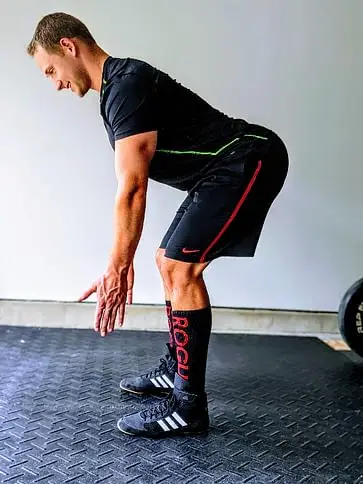
The Myth of Perfect Form
The relationship between injury and technique is not as clear-cut as most people think…and “movement experts” like to pretend.
This is why many runners and lifters can train with terrible form and avert injury for years.
And why others move with picture-perfect technique and still experience pain.
Loading is the biggest contributor to injury, along with these factors…
3 Underappreciated Risk Factors
Consider these 3 contributors to injury risk and pain:
Sleep: Inadequate sleep increases the risk of sports injuries. For example, researchers found that sleeping less than 7 hours per night for 2 weeks elevated injury risk by 70%!
Stress: Studies show a clear relationship between injury and high stress levels. What’s more, negative life events are linked to elevated injury risk.
Strength: Athletes who perform resistance training reduce injury risk by a massive 40-70%, depending on the specific intervention and athletic population. Meanwhile, stretching is virtually useless for injury prevention.

Loading 101
The concept of progressive overload explains the biggest keys for injury prevention and physical strength.
The human body becomes stronger and faster in a three-stage process: stress, recovery, adaptation.
When you go to the gym and lift weights, you apply stress to your bones, tendons, and muscles.
Fueled by carbs and protein, your body begins the recovery process to rebuild your tissues. Once the recovery process is complete, your tissues experience adaptation – they are even stronger and more resilient than before training.
Injuries occur when too much stress (loading) is applied, either all at once or over time, overshooting your body’s ability to recover and adapt.
Underloading, the other extreme, is equally unproductive because it leaves the musculoskeletal system susceptible to injury – like a thin frayed rope creaking under a massive load, injury seems inevitable.
The Takeaway: Whenever you introduce a new stimulus, like a running program or joining the gym, start slow and incrementally add load over time.
Not only will you avoid crippling soreness after the first few sessions, your injury risk will plummet and training will feel more fun.
Use the progressive overload principle for enhancing physical fitness, durability and resilience
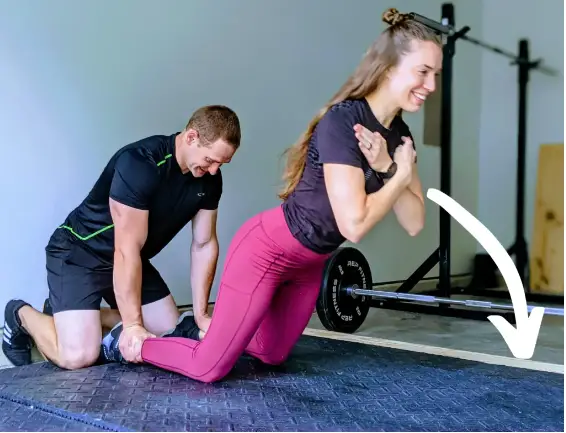
The Verdict
Does technique matter? Yes, but it’s not the sole determinant of injury risk.
Instead of a single-minded obsession over perfect technique, manage factors like stress and sleep for physical (and mental) health. And utilize progressive overload to reduce injury risk and build resilience.
Further Reading
Exercise is the most powerful treatment for long-lasting pain relief.
Learn the 3 best exercises for full-body strength. Plus, the 2 adaptations that make us stronger:
How To Get Strong and Stop Hurting
And for science-supported health tips you won’t find anywhere else, join the free Facts & Physio Newsletter. Plus, get The Recovery Checklist when you sign up.