
Conventional wisdom says tight hamstrings cause back pain.
Read most low back pain articles written by non-experts, and you’ll get the distinct impression that tight hamstrings cause major back problems.
They don’t.
Conventional wisdom is wrong.
There is “no robust evidence” that hamstring tightness contributes to low back pain, according to a 2021 meta-analysis.
The same study didn’t even find a conclusive correlation between back pain and hamstring tightness.
What’s more, hamstring stretching isn’t even a top treatment recommendation in low back pain guidelines.

A Nice Theory
“Tight hamstrings cause back pain” makes sense in theory.
The hamstrings, a group of 3 muscles on the back of your legs, attach to your ischial tuberosities (sit bones) and below your knees.
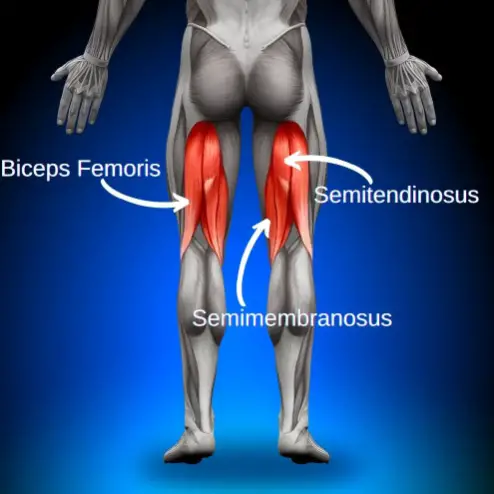
In theory, tight hammies restrict pelvis motion, increasing the movement demands at the lumbar spine.
Stiff hamstrings also affect lower back and pelvis mechanics and posture.
Proponents of the “tight hamstrings cause back pain” idea like to use fancy terms like lumbopelvic rhythm and anterior innominate rotation to describe this flawed theory.
Don’t let the jargon fool you!
Studies show little evidence that tight hamstrings cause back pain. (Not because it’s impossible; more so because back pain is complex and multi-factorial.)
But ironically, back pain can cause tight hamstrings.
Here’s how:
The Invisible Source
Back pain can make your hamstrings feel like steel cables because of sciatic nerve irritation.
The sciatic nerve originates in the lumbar spine and travels down the back of the leg (between the hamstrings), powering your leg muscles.
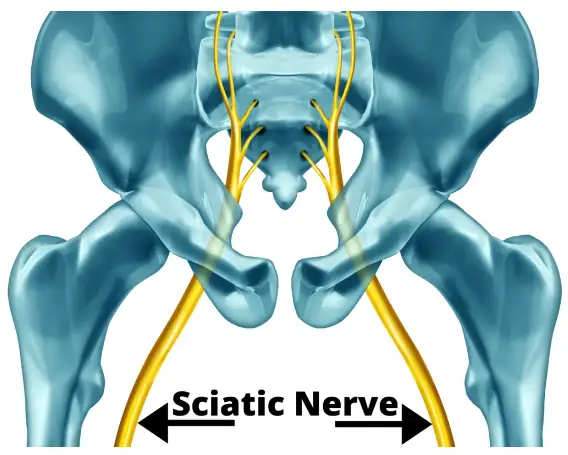
Sciatic nerve pain, commonly known as sciatica, causes adverse neural tension, a protective response that reduces nerve and muscle flexibility in the posterior leg.
Because nerves supply power to many muscles and heal slowly if injured, the brain protects nerves even if it causes muscle tightness or injury.
Subsequently, research indicates adverse neural tension contributes to repetitive hamstring strains – the muscle sacrifices itself to protect the nerve.
As you might expect, stretching a hamstring that’s tight because of underlying nerve tension does not help.
Ironically, aggressive hamstring stretching can aggravate the sciatic nerve, causing more hamstring tightness.
So what causes sciatica?
While piriformis syndrome is a popular (mis)diagnosis, it’s not your piriformis 99.7% of the time.
Instead, most sciatica stems from the lumbar spine, where the sciatic nerve originates.
Therefore, the best sciatica relief exercises treat the lumbar spine or desensitize the inflamed nerve.
Flexibility Check
Most of my clients who complain of tight hamstrings actually have normal flexibility.
Here’s how to check your hamstrings with the 90-90 Hamstring Mobility Test:
Lie on your back and grab the back of your knee. Straighten your knee as far as possible.
Is your knee straight?
Have a friend take a picture from the side, video yourself from the side, or visualize the angle in a mirror.
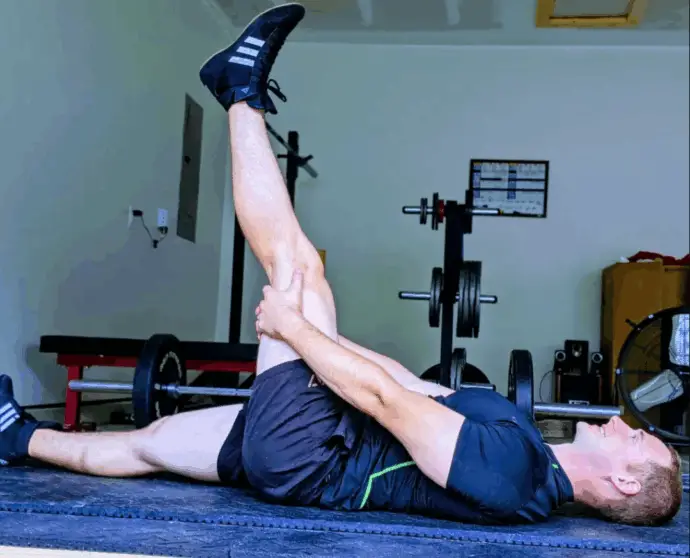
If you can get your knee within 20-30 degrees of straight, your hamstrings aren’t tight. My knee is about 25 degrees from fully extended, so my hamstring mobility is normal.
If your shin is barely past parallel from the ground, you have some stretching to do!
The Flexibility Problem
Being too flexible is a problem.
Just ask anyone with Ehlers-Danlos syndrome, a connective tissue disorder characterized by excessive flexibility.
Super flexible folks have higher risks for injuries like joint dislocations.
Hypermobility is also linked to chronic low back pain, and core stabilization exercise is crucial to offset excess spine mobility and reduce pain.
“My Hamstrings Feel Tight”
The hamstrings feel tight for a few reasons.
Sometimes they are truly tight and inflexible.
Other times the hamstrings tense up in a protective response, like in the case of sciatic nerve tension.
In other cases, overloading the muscle creates trigger points in the tissue – sore “knots” that make muscles feel tight. Weak muscles are particularly susceptible to trigger points.
The best solution to tight hamstrings? Strengthen them.
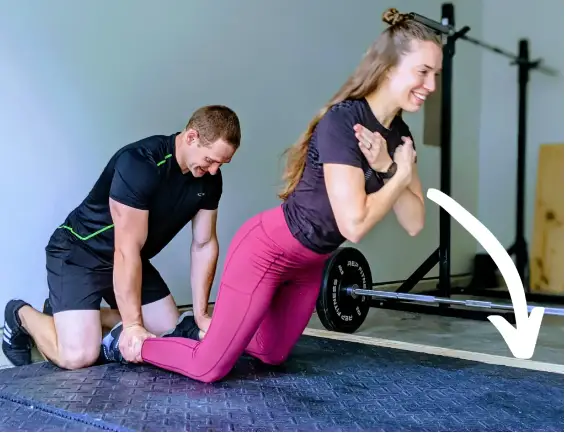
Strength drills like the Nordic Hamstring Exercise (shown above) are proven to lengthen the hamstrings while building strength and reducing injury risk.
Further Reading
For more insights on hamstring tightness, strength exercises and pain patterns, check out this article: Can Tight Hamstrings Cause Knee Pain?
And for more evidence-based health insights, join the free Facts & Physio Newsletter. Plus, get The Recovery Checklist when you sign up.