
Pain-free movement starts with choosing the right shoe for your foot structure and strengthening your feet.
This quote sounds like it’s straight out of a shoe commercial (*cue inspirational music*), but it’s 1) made up, and 2) not true.
Of course it’s better to have strong feet than to have weak feet.
But the link between foot strength and musculoskeletal pain is weak – foot strengthening is beneficial for foot/ankle/calf pain, may be helpful for knee pain, and is probably a waste of time for hip and back pain.
And custom shoes don’t prevent injury as well as you might expect.
Running Shoes & Foot Type
Massive studies have matched foot type (high, medium, low arches) to running shoes (cushioned, neutral, stability) for optimal foot function.
The result: No effect on injury risk. Zero. None.
That’s according to a 2022 review of 12 studies and 11,240 participants.
So buying a shoe that controls your overpronation is fine, just don’t expect it to prevent injury. Kind of like static stretching.
Heel Pain & Shoe Orthotics
Which works better for heel pain relief?
A) Custom shoe insert built to relieve heel pain
or
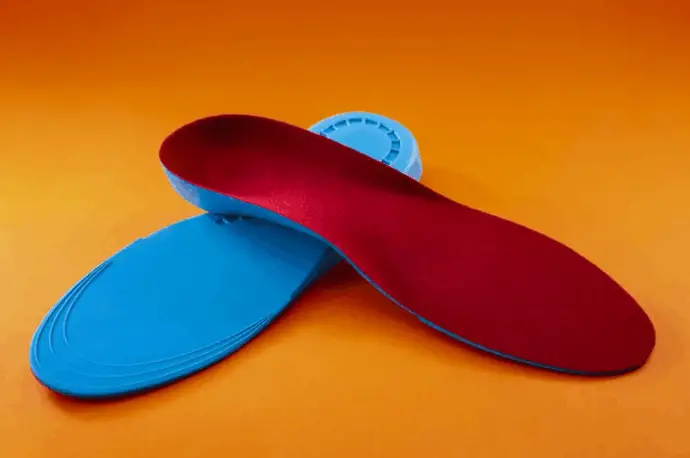
B) An off-the-shelf shoe insert you can buy at the corner drug store
If you answered “they’re equally effective,” you are correct.
Heel pain guidelines conclude that dropping $600 on custom shoe orthotics is probably unnecessary, because off-the-shelf inserts relieve pain just as fast.
Learn more about heel pain relief here: The Comprehensive Guide to Plantar Fasciitis Rehab
3 Shoe Rules
Here are the Facts & Physio rules for choosing the right shoe.
1) Activity-Appropriate
Select shoes suitable for the activity.
Sounds obvious, right?
Still, I see a lot of active folks try to squat and deadlift heavy weights while wearing running shoes.
Running shoes are cushioned and flexible to absorb repetitive forces. All that cushion keeps the knee and hip joints comfortable during long runs, but it creates an unstable surface for heavy lifts.
Conversely, deadlift and Olympic lifting shoes are sturdy enough for heavy lifting, but suboptimal for running and agility work.
2) Consider Width
Traditional shoe sizing primarily considers foot length, but not always width. Squeezing into a shoe that’s too narrow (especially at the toe box) will compress your metatarsals together.
With your toes smashed together, your foot becomes stiff, rigid, and unable to absorb force effectively. And poor force attenuation elevates injury risk.
So make sure you’re choosing the right shoe that’s wide enough for your foot, especially at the toe box.
3) Comfort is King
Trust your intuition. Your proprioceptive system – the sensory input from your foot and legs – gives you invaluable feedback when you’re selecting shoes.
When shoes are (literally) the right fit, they feel comfortable. Otherwise, move on to a different option.
Bonus Tip: Rotate Shoes
Wearing several pairs of shoes throughout the week will distribute load across the foot. This strategy can dramatically reduce overuse injuries.
One study found that factory workers who rotated their shoes experienced 72% less plantar fasciitis compared with those who wore the same pair of shoes all week.
Further Reading
Contrary to popular belief, pain during rehab is (sometimes) productive.
Learn how the best rehab pros use pain to accelerate recovery – and when avoiding pain is the wiser choice:
Should Physical Therapy Hurt? When to Avoid Pain (And When to Embrace It)
And for more evidence-based health insights, join the free Facts & Physio Newsletter. Plus, get The Recovery Checklist when you sign up.