
Everybody hurts sometimes…because of back pain.
This article answers the critical question, “What’s the best back pain exercise?“
Low back pain is a bigger headache than, well, headaches. Just barely, say scientists. Back pain is complex. Finding the pain generator isn’t as simple as looking at a high-def spine picture like an X-Ray or MRI.
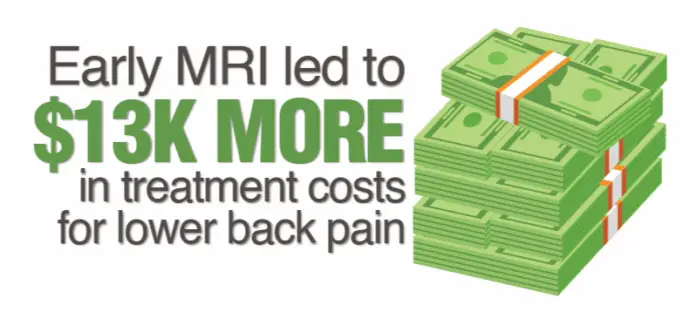
In fact, getting an MRI too early is linked to exorbitant treatment costs. And you don’t get what you pay for, because outcomes are worse.
Most strange of all, healthy people have abnormal spine imaging findings all the time.
Arthritis and degenerative disc disease are prevalent in the pain-free population, according to research on 3,100 asymptomatic individuals.
And most healthy 30-year-olds have disc degeneration. Likewise, many disc bulges are pain-free.
Start Here
Where should you go first for back pain treatment?
Scientists looked at 150,000 cases of low back pain to find out.
The verdict: Getting physical therapy first produced positive outcomes like 89% fewer opioid prescriptions, 28% less advanced imaging (e.g. MRIs) and 14% fewer emergency room visits.
What Good PT Looks Like
Physical therapists use back pain categories to classify spine pain and select the best treatments.
For example, Treatment-Based Classification sorts back pain into 3 categories based on severity.
Other recent guidelines advise physios to categorize back pain based on patient history, physical exam findings and symptom behavior.
Back pain isn’t one-size-fits-all.
Good treatment isn’t either.
Effective back pain rehab boils down to finding pain relief, building strength, and staying active during the healing process.
Now for the best back pain exercise…
Best Pain-Reliever
It’s not ibuprofen!
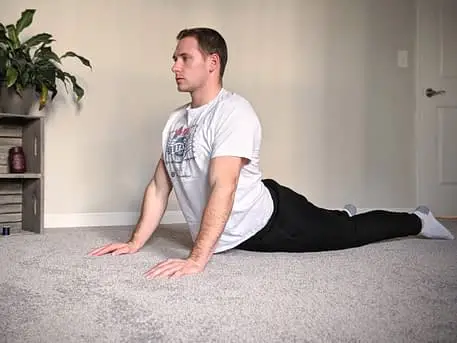
The best back pain exercise for pain relief is repeated lumbar extensions, the most popular McKenzie exercise.
These gentle stretches relieve pain and enhance flexibility almost instantly for >50% of back pain sufferers.
Related: Do NSAIDS Cause Chronic Back Pain?
The McKenzie Method works by finding a directional preference – one direction of movement that improves symptoms right away.
About 60 to 78% of those with spine pain have a directional preference.
Extension is the most common directional preference for low back pain (83%).
Learn how it works in the best-selling book Treat Your Own Back.
Best Strength Builder
Building strength around the spine creates resilience and reduces injury risk.
This may surprise you, but the deadlift is an excellent low back pain exercise – when performed with good technique.
It’s functional – we lift stuff from the ground all the time. Plus it beefs up the posterior chain (hamstrings, glutes, back extensors).
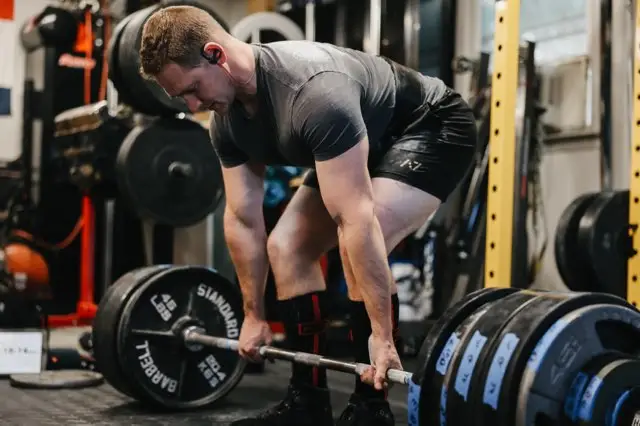
The deadlift works best for mild-to-moderate low back pain.
Related: Are Deadlifts the Best Exercise for Lower Back Pain?
Best General Exercise
It’s the epitome of functional fitness – walking. Smart PTs add walking to almost every back pain rehab plan.
Walking gently rotates and extends the spine, keeps the heart and lungs healthy, and fits perfectly into an active recovery approach.
Plus, aerobic exercise melts stress and accelerates recovery.
Cardio also eases pain via exercise-induced analgesia, in part by releasing endogenous opioids, pain-relieving chemicals created by the body.
Avoid These 3
It’s tough to pick just 3. Ultrasound and E-Stim aren’t even good enough to make the “avoid” list.
1. Inversion Table & Lumbar Traction
Mom was right. Hanging upside-down like Batman is probably a waste of time.
Lumbar traction and inversion tables apply a traction force to decompress the spine and (theoretically) reduce pain.
Guidelines recommend against using lumbar traction for almost all types of low back pain…with the possible exception of hyper-irritable sciatica.
2. Back Muscle Stretches
Most back stretches (and hamstring stretches) bend the spine forward into flexion.
Since >50% of people with back pain have a directional preference of extension, flexing the spine forward worsens pain and stiffness.

Studies show only ~5% of back pain has a flexion directional preference.
3. Passive Treatments Only
Passive treatments are done to the patient; active treatments are done by the patient.
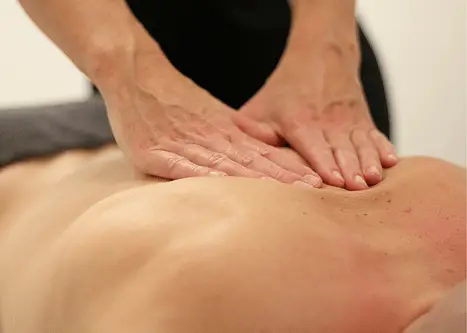
Dry needling, spinal manipulation and hands-on manual therapy are the best passive treatments for back pain.
But they aren’t very effective in isolation.
These passive treatments, when combined with an active treatment approach, create the optimal environment for healing.
You can read about ineffective passive treatments in the PT treatment rankings article – and see how ice and heat stack up.
Further Reading
Check out these 3 articles on low back pain:
7 Proven Pinched Nerve Exercises
The best exercises to kick sciatica for good.
5 Ways to Sit with Less Pain
Sitting usually exacerbates low back pain. Here’s how to sit more comfortably.
Debunked: 10 Myths About Low Back Pain
Is a misaligned spine causing all your pain? Plus, why it’s not your piriformis.
And for more evidence-based rehab and recovery insights, join the free Facts & Physio Newsletter. Plus, get The Recovery Checklist when you sign up.